

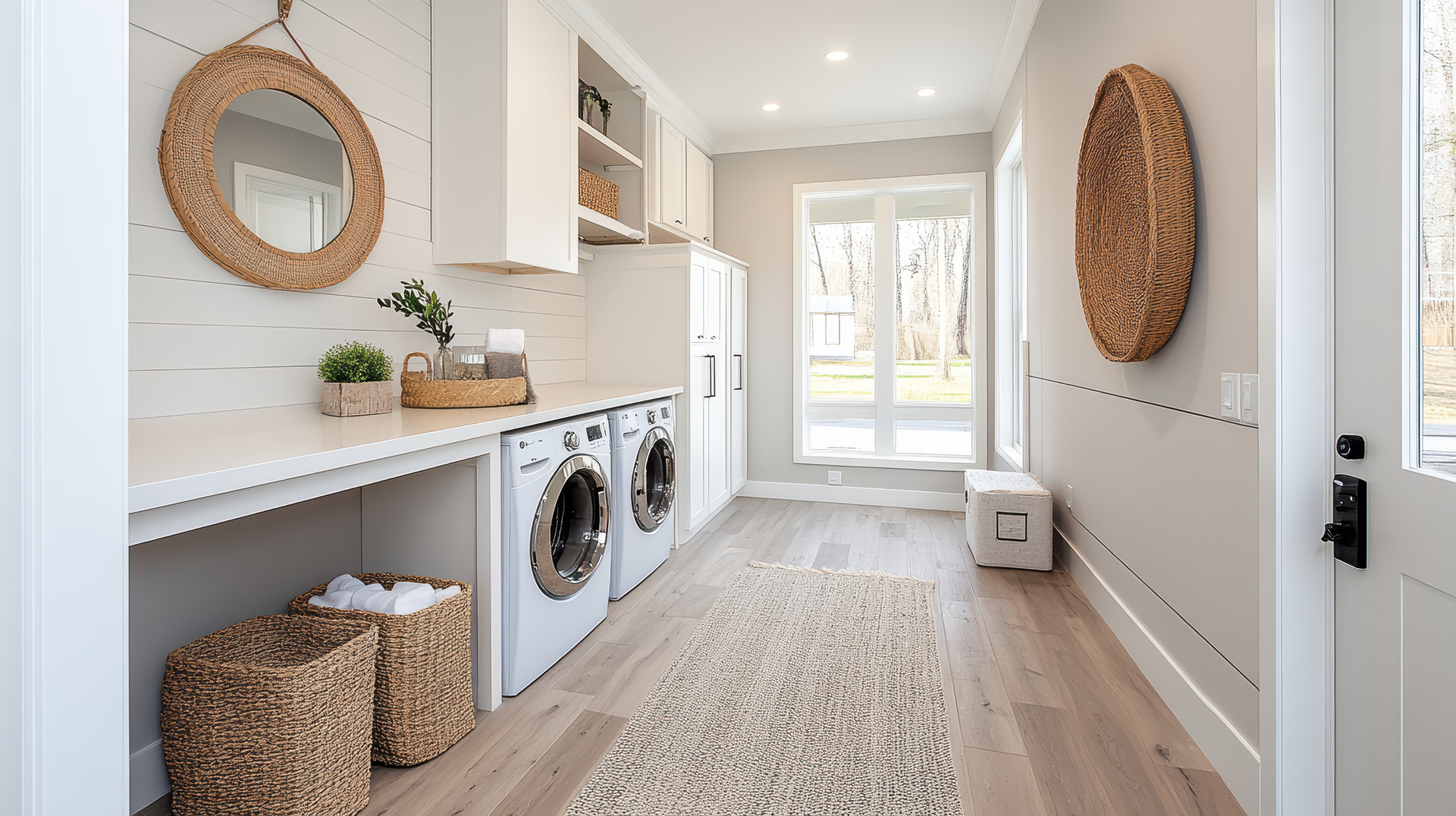
When shopping for new floors, the difference between waterproof laminate and water-resistant laminate can feel subtle at first glance. Both are designed to handle moisture better than traditional laminate of the past. Both can work beautifully in busy households. But the performance gap between the two becomes clear once spills, humidity, and daily wear come into play.
For homes across Northeast Wisconsin, especially in kitchens, mudrooms, and basements, understanding this distinction can prevent costly mistakes and ensure flooring performs the way it should for years to come.
The core difference comes down to protection
At the heart of the conversation is how each product handles water exposure over time.
Water-resistant laminate is designed to repel moisture for a limited period. It can handle small spills, damp mopping, and occasional splashes, as long as the liquid is cleaned up relatively quickly. The top wear layer and tight locking system help slow water penetration, but the core beneath is still vulnerable if moisture lingers.
Waterproof laminate, on the other hand, is engineered to block water from penetrating the surface and seams for a much longer duration. Many options feature advanced core technology that resists swelling even if exposed to standing water for extended periods. That added layer of protection makes a meaningful difference in high-risk areas.
Why the core construction matters
Traditional laminate uses a high-density fiberboard (HDF) core. While dense and durable, HDF can swell if water seeps into the seams and sits for too long. That swelling is often permanent.
Waterproof laminate often incorporates a modified core that is more dimensionally stable and less reactive to moisture. Combined with enhanced locking systems and tighter seam technology, it creates a floor that stands up better to real-life accidents.
This is why homeowners comparing options inside a dedicated laminate category like this detailed guide to laminate flooring should look beyond surface appearance and ask deeper questions about internal construction.
Where water-resistant laminate makes sense
Water-resistant laminate can be a strong choice in areas where moisture exposure is minimal and manageable.
Living rooms and bedrooms
In spaces without sinks, appliances, or exterior doors, water exposure is typically limited to occasional spills. In these rooms, water-resistant laminate performs well and offers excellent durability, scratch resistance, and visual appeal.
Home offices and hallways
Hallways and offices see foot traffic but rarely standing water. As long as wet boots and snow are not constant concerns, water-resistant laminate provides a practical and budget-conscious solution.
For many households, this level of protection is more than adequate in low-moisture zones.
When waterproof laminate earns its place
Certain rooms demand more resilience.
Kitchens with daily activity
Cooking areas experience frequent spills, dropped ice cubes, and splashes around sinks and dishwashers. Even with quick cleanup, moisture can reach seams repeatedly. Waterproof laminate adds a buffer of protection that reduces the risk of long-term damage.
Entryways and mudrooms
Wisconsin weather brings snow, rain, and slush. Entry points endure wet shoes and dripping coats. Waterproof laminate helps defend against swelling and seam separation caused by repeated moisture exposure.
Finished basements
Basements often deal with humidity fluctuations and the possibility of minor moisture intrusion. While laminate is not a substitute for proper moisture control, waterproof options offer added peace of mind in below-grade installations.
Homeowners comparing laminate to other moisture-focused materials may also explore alternative solutions within the broader category of waterproof flooring to ensure the right product is selected for each environment.
Spill time versus soak time
One practical way to think about the difference is “spill time” versus “soak time.”
Water-resistant laminate buys time. It allows for cleanup before damage occurs.
Waterproof laminate extends that time significantly. If a spill is missed for several hours, or if water sits in a seam overnight, waterproof construction is far less likely to result in swelling or edge damage.
That extra protection does not mean neglect is acceptable. No laminate floor should be treated like tile when it comes to standing water. But the margin for error is noticeably greater.
Installation quality still matters
Even the most advanced waterproof laminate can fail if installed improperly. Expansion gaps, subfloor preparation, and seam alignment all play a role in long-term performance.
Professional installation ensures the locking system is engaged correctly and perimeter spacing allows for natural expansion and contraction. Without those steps, moisture protection may be compromised.
Appearance and style considerations
One advantage both options share is visual versatility. Modern laminate technology offers realistic wood textures, embossed finishes, and a wide range of plank widths and tones.
From rustic oak looks to contemporary light neutrals, laminate delivers strong design flexibility. The moisture rating does not limit style options. Instead, it influences performance expectations.
That means selecting between waterproof and water-resistant versions should be based on room conditions rather than aesthetics alone.
Budget and long-term value
Waterproof laminate typically carries a slightly higher investment upfront. However, in moisture-prone areas, that added cost can prevent premature replacement.
Water-resistant laminate may offer excellent value in dry spaces. The key is matching the product to the room’s real-world demands rather than applying a one-size-fits-all approach throughout the home.
A thoughtful mix of both types in different rooms can optimize performance while maintaining consistent visual flow.
Making the right choice for each room
Choosing between waterproof and water-resistant laminate is less about which product is “better” and more about which is appropriate for specific conditions.
Rooms with consistent moisture exposure benefit from waterproof construction. Low-risk spaces perform beautifully with water-resistant protection.
A knowledgeable flooring company can evaluate subfloor conditions, traffic patterns, and moisture risks to recommend the most suitable option for each space. That guidance ensures confidence long after installation is complete.
See the difference in person at Bayland Flooring
Selecting the right laminate starts with understanding how each product performs under real-life conditions. At Bayland Flooring in New Franken, our flooring experts walk through the differences between waterproof and water-resistant laminate, explain core construction, and help match products to each room’s needs. With in-stock options ready for immediate projects and thousands of special-order styles available, our team makes the process simple and straightforward. For personalized guidance and a free in-home measurement, connect with us through our contact us page and let our flooring company help bring the right solution home.


