

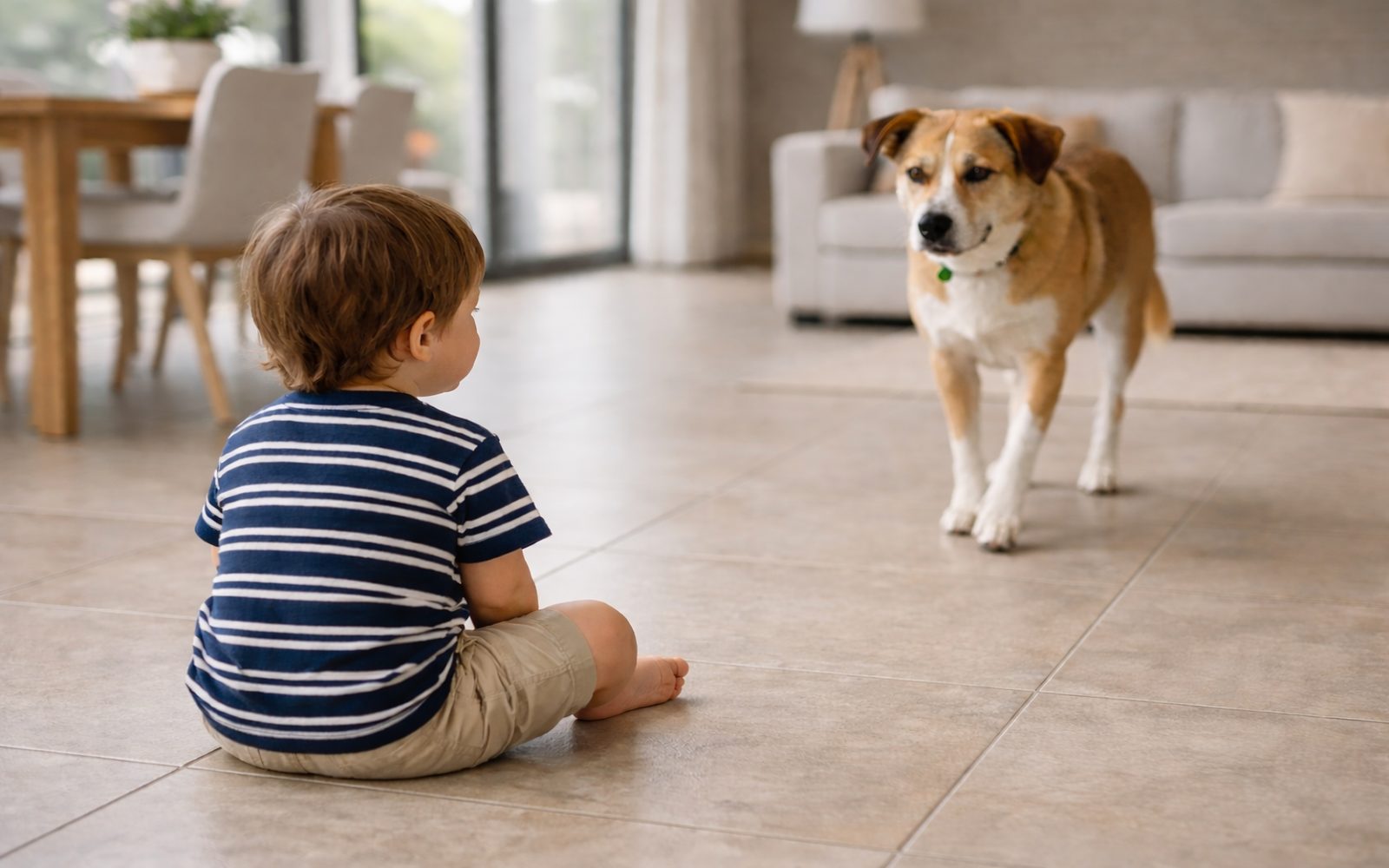
Tile flooring shows up in many family homes for one simple reason—it handles messes better than most surfaces. Spills wipe up easily, pet accidents don’t soak in, and muddy footprints don’t leave lasting marks. But there’s one detail that often gets overlooked when choosing tile for homes with kids and pets: slip resistance.
Not all tile flooring offers the same level of traction. Some surfaces become slick the moment water, bath splash, or pet drool hits the floor. Understanding tile slip ratings makes it easier to choose a surface that feels secure underfoot without giving up the clean, modern look tile is known for.
What slip resistance actually measures
Slip resistance refers to how much friction a surface provides when someone walks across it. In simple terms, higher friction means better grip. Lower friction means a higher chance of slipping, especially when the floor is wet.
Slip ratings are determined through standardized testing, not guesswork. These tests measure how much force it takes for a foot (or testing device) to slide across the tile surface under specific conditions. For homes with kids running barefoot or pets with fast-moving paws, this number matters more than appearance alone.
Understanding DCOF and why it replaced older ratings
Modern tile slip resistance is most commonly measured using DCOF, which stands for Dynamic Coefficient of Friction. Unlike older methods that tested standing still, DCOF measures traction while moving—much closer to real-life walking.
The standard used in the U.S. comes from ANSI and evaluates tile under wet conditions. For interior residential spaces that may get wet, such as kitchens, bathrooms, mudrooms, and entryways, a DCOF rating of 0.42 or higher is typically recommended.
This shift matters because movement is when most slips occur, especially when kids sprint through hallways or pets turn corners at full speed.
Areas of the home where slip ratings matter most
Not every room requires the same level of traction. Understanding how different spaces are used helps guide the right tile choice.
Kitchens benefit from higher slip resistance due to spills, dropped ice, and frequent cleaning. Bathrooms demand even more traction because water on the floor is a daily reality. Entryways and mudrooms see rain, snow, and wet footwear, making slip ratings especially important during Wisconsin winters.
Living rooms and bedrooms with tile can use slightly smoother finishes, but when kids and pets share the space, choosing a safer surface still pays off long-term.
Tile finishes that improve grip without sacrificing style
Finish plays a huge role in how slippery a tile feels. Highly polished tile reflects light beautifully but often offers the least traction. Matte finishes provide a more subtle look and significantly better grip, especially when wet.
Textured tiles go a step further by adding micro-grip to the surface. These finishes are especially helpful in homes with active dogs or young children learning to walk. Modern manufacturing makes textured tiles feel comfortable under bare feet while still being easy to clean.
Natural stone-look porcelain often delivers the best balance—visual depth with built-in slip resistance.
What pet owners should know about tile traction
Pets rely on claw grip rather than footwear, which changes how tile behaves under movement. Smooth surfaces can cause dogs to slip when accelerating or stopping, leading to joint strain or injury over time.
Tiles with higher DCOF ratings help pets maintain stability, especially on stairs, hallways, and open living areas. Matte or lightly textured porcelain tiles reduce scrambling and give pets more confidence moving around the home.
For older pets or breeds prone to hip issues, slip resistance isn’t just about safety—it’s about daily comfort.
Slip ratings versus real-life conditions
Slip resistance testing happens in controlled environments, but homes are unpredictable. Water, soap residue, pet hair, and cleaning products can all affect traction.
Choosing a tile that barely meets minimum ratings may work on paper but feel slick in practice. That’s why flooring experts often recommend exceeding minimum DCOF requirements in family homes rather than aiming for the lowest acceptable number.
The right tile should feel secure even when life gets messy.
Common misconceptions about “non-slip” tile
Many homeowners assume that textured tile automatically means slip-proof. While texture helps, not all textured tiles are tested equally. Some decorative textures offer visual interest but limited traction.
Another misconception is that outdoor-rated tile is always safer indoors. Outdoor tiles often have high slip resistance but may feel rough or uncomfortable inside the home. The goal is balance—enough grip to prevent falls without making the floor difficult to clean or harsh on bare feet.
Picking a tile that fits daily life
Slip ratings are only one part of the decision, but they deserve real attention in homes with kids and pets. The best flooring choices support movement, play, spills, and cleanup without constant worry.
Working with flooring experts helps narrow down options that meet safety needs while still fitting the home’s design style. Seeing and feeling tile samples in person often reveals differences that numbers alone can’t explain.
Talk with flooring experts about safer tile choices for kids and pets
At Bayland Flooring, helping families choose tile that works for real life is part of what sets us apart. Our showroom in New Franken, WI features a wide range of in-stock tile options with slip-resistant finishes ready for immediate installation. From busy kitchens to pet-friendly living spaces, our flooring experts help match slip ratings, style, and durability—backed by free in-home measurements throughout the Green Bay and Franken areas. Contact us today!


