

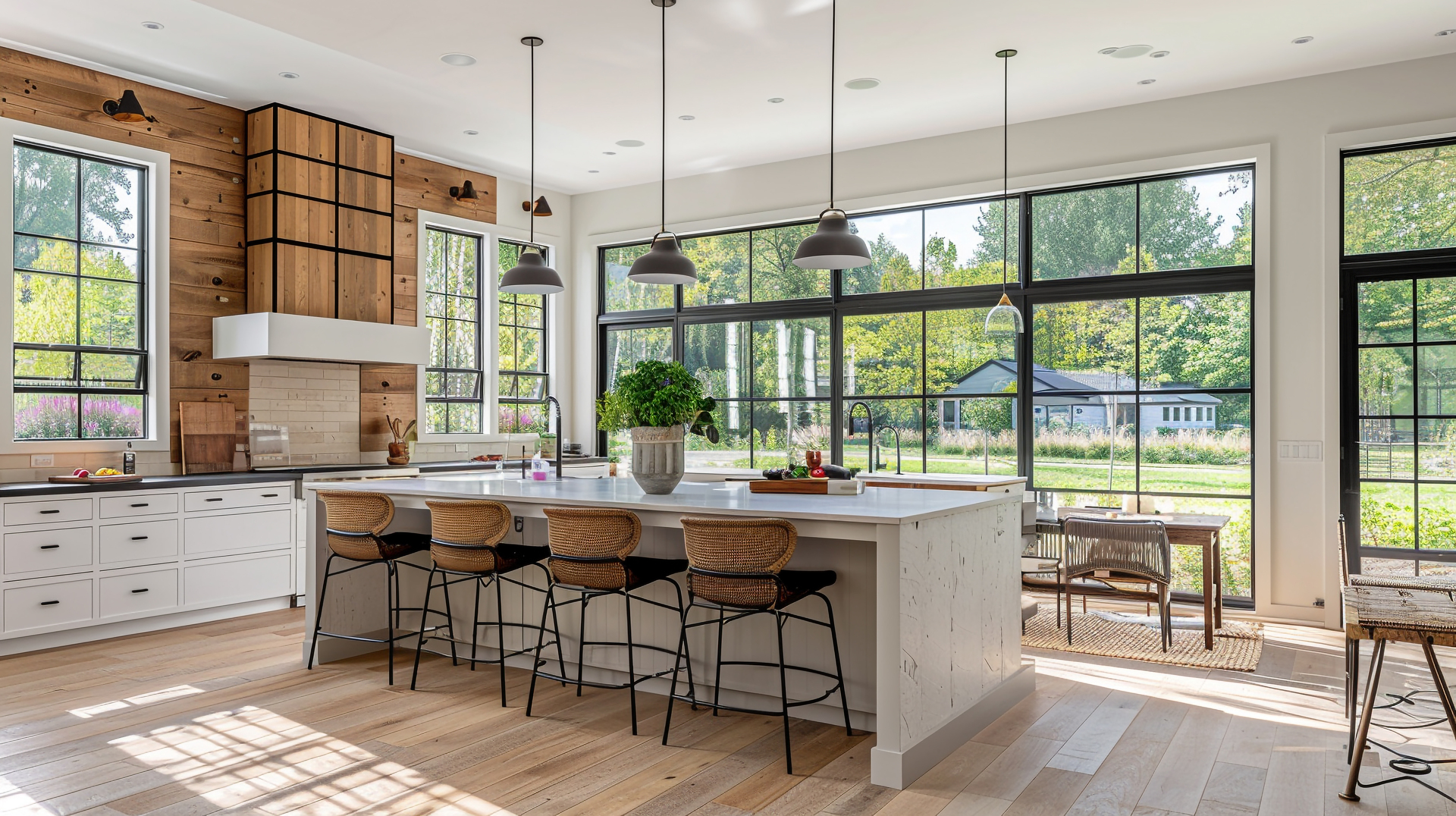
Hardwood flooring brings warmth, character, and timeless style to any space—but when it comes to the kitchen, opinions tend to split. Kitchens are high-traffic, high-moisture, and high-activity zones, and that makes choosing flooring a bigger decision. Many homeowners love the seamless look hardwood brings when transitioning from room to room. Others worry about spills, scratches, and long-term durability. Here is a clear, balanced look at the real pros and cons of installing hardwood in kitchens, so the right choice feels easier.
Why kitchens and hardwood remain a popular match
Design-minded homeowners appreciate how hardwood instantly elevates the look of a kitchen. It warms up modern cabinetry, softens the feel of contemporary appliances, and helps open floor plans feel visually unified. It’s one of the few materials that works with nearly any style—from farmhouse to Scandinavian to traditional Wisconsin homes.
The big advantages that keep hardwood in demand
Hardwood flooring is a classic for a reason. These are the benefits that continue to draw homeowners in:
Warmth and comfort underfoot
Compared to tile or stone, hardwood feels softer, warmer, and easier on the joints—important for anyone who spends a lot of time cooking or hosting in the kitchen. It brings a welcoming feel that other hard-surface materials can’t quite match.
A seamless, cohesive home design
One of the strongest arguments for using hardwood in the kitchen is visual flow. When the same flooring runs throughout the main level, the entire home feels larger and more unified. This is especially appealing in open-concept homes across Northeast Wisconsin.
Natural beauty that never goes out of style
Hardwood doesn’t chase trends—it sets them. Its natural grain, color variations, and depth add personality to a kitchen in a way manufactured floors attempt to replicate but rarely duplicate. From oak and hickory to maple and walnut, there’s a species and tone for every kitchen design.
The ability to refresh the look over time
Hardwood can be refinished multiple times. So instead of replacing floors when design preferences change, a fresh stain or finish can completely transform the kitchen. That gives hardwood a lifespan that easily outlasts many other flooring materials.
Better long-term value
While hardwood requires care, it often increases home value. Buyers recognize its appeal and longevity, especially when it flows throughout the living spaces.
The challenges of hardwood in kitchens
While hardwood brings beauty and versatility, there are important considerations:
Susceptibility to moisture damage
Kitchens experience spills, splashes, steam, and humidity fluctuations. If moisture sits too long on the surface or seeps between planks, hardwood can swell, stain, or warp. Regular maintenance and mindful cleaning become essential.
More prone to dents and scratches
Dropped utensils, dragged chairs, and heavy appliances can leave marks. Hardwood species vary in hardness, but even the toughest wood can show wear in a busy kitchen. Area rugs, felt pads, and protective mats help—but it’s still a softer material than tile or luxury vinyl.
Requires consistent upkeep
Hardwood needs regular sweeping, occasional polishing, and proper cleaning products. It’s not overly complicated, but it’s more maintenance than many homeowners expect. Spills should be wiped up promptly to avoid long-term issues.
Not the most budget-friendly option
Between material and installation costs, hardwood sits at the higher end of the spectrum. While it pays off over time, it requires a larger initial investment than some kitchen-friendly alternatives like laminate or LVP.
Ways homeowners overcome hardwood’s kitchen limitations
Plenty of households make hardwood work beautifully in their kitchens by taking a few simple precautions:
Add rugs near sinks and cooking stations
Use window coverings to limit direct sunlight
Maintain stable humidity levels
Choose harder wood species or durable finishes
Apply protective pads under stools and chairs
Clean up spills promptly
Schedule refinishing as needed
These steps help hardwood stay beautiful and functional for decades.
Contact our showroom to explore kitchen-friendly hardwoods at factory-direct pricing
Hardwood floors can absolutely thrive in kitchens—with the right expectations and a bit of ongoing care. They deliver unmatched beauty, warmth, and value, and they elevate the entire feel of a home. However, hardwood isn’t ideal for every household. Families with heavy foot traffic, pets, or constant spills may prefer more moisture-resistant flooring options. Ultimately, it’s about balancing lifestyle with style preferences.
Bayland Flooring is Northeast Wisconsin’s trusted flooring expert, offering top-quality hardwood at factory-direct pricing. From free in-home measurements to hundreds of in-stock options and thousands of special-order styles, the right kitchen flooring is always within reach. Visit our New Franken showroom or schedule a consultation to explore the best solutions for your home.


