

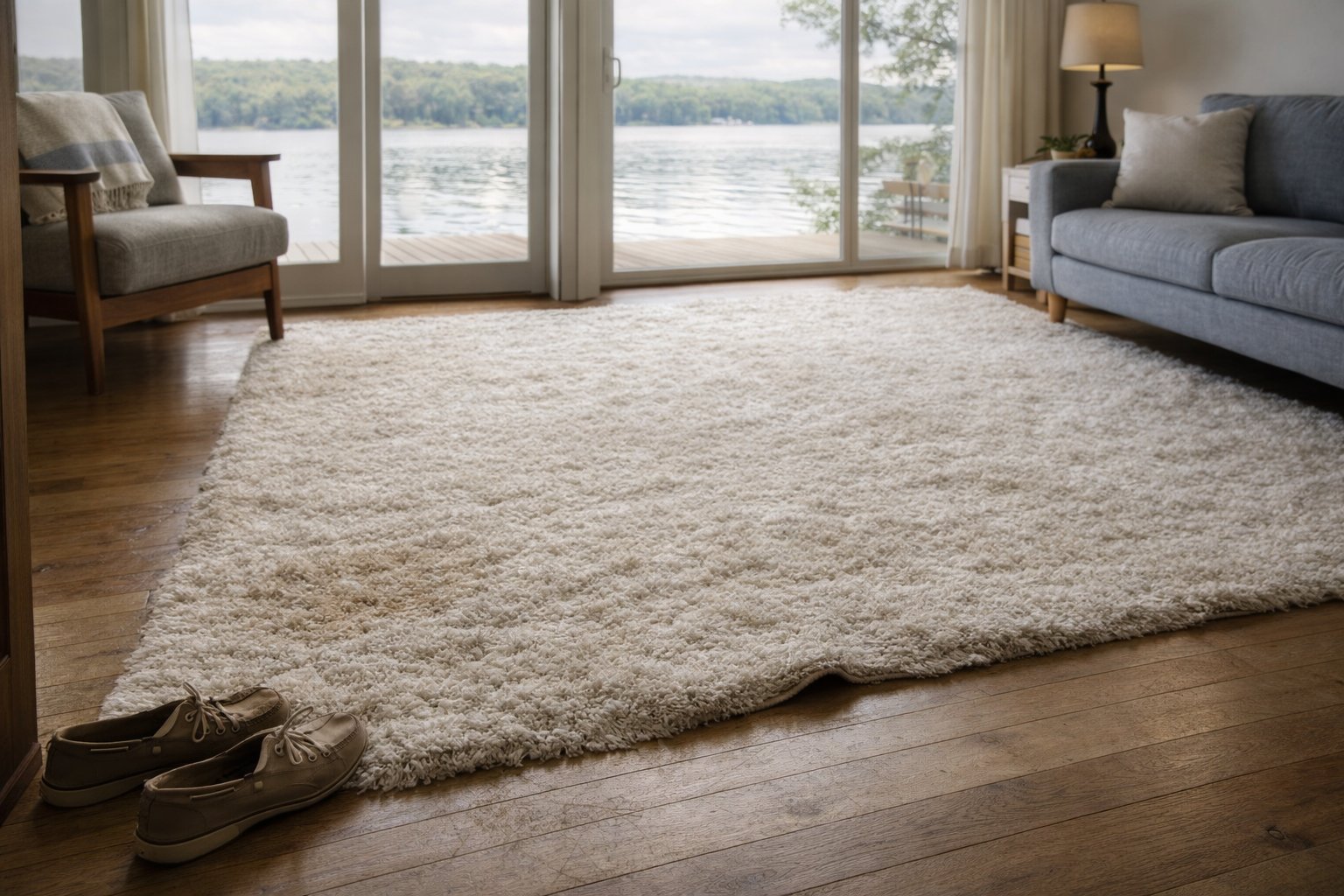
Lakefront homes have a vibe that’s hard to beat. Natural light, water views, barefoot mornings, and a relaxed flow between indoors and out. Area rugs often play a big role in making these spaces feel warm and pulled together. But in lakefront homes, rugs also face conditions most standard interiors never deal with.
Humidity. Sand. Wet feet. Changing seasons. Direct sunlight.
And that’s where the biggest mistake happens.
The most common issue isn’t color, pattern, or size. It’s choosing an area rug based purely on looks, without considering how lakefront conditions affect materials, construction, and long-term performance.
When style leads the decision instead of environment
A high-pile wool rug might feel luxurious in a showroom. In a lakefront living room, that same rug can become a magnet for moisture, odors, and wear.
Lakefront homes experience higher humidity levels year-round. Doors open frequently. Shoes come off near entryways. Rugs placed near patios, docks, or sliding doors take on far more stress than they would in a typical suburban home.
When the rug choice is driven by texture and design alone, issues start showing up fast:
Fibers staying damp longer than expected
Musty smells that don’t go away
Edges curling due to moisture absorption
Fading from consistent sunlight exposure
These problems aren’t defects. They’re predictable outcomes of mismatching the rug to the setting.
Why moisture matters more than most homeowners expect
Even when water isn’t visibly pooling, moisture is still present. Humid air settles into fibers. Condensation forms overnight. Small amounts of lake water get tracked inside again and again.
Natural fibers like wool, jute, sisal, and cotton absorb moisture easily. That absorption can lead to slow drying times and internal breakdown of the rug’s structure. In lakefront homes, this often shows up as rippling, stretching, or backing separation.
Synthetic fibers such as polypropylene or solution-dyed polyester handle moisture very differently. They resist absorption, dry faster, and are far less likely to hold odors. For many lakefront spaces, that difference alone can determine whether a rug lasts two seasons or ten years.
Pile height choices that backfire near the water
Another mistake happens with pile height. Plush, high-pile rugs look cozy, especially in open-concept living rooms. But near lakes, thick piles trap sand, grit, and moisture deep within the fibers.
Low-pile and flatweave rugs release debris more easily and dry faster after damp exposure. They also sit flatter on hard surface flooring, reducing curling at the edges when humidity levels fluctuate.
This doesn’t mean every rug must be flat and utilitarian. It means pile height should match how the room is used. Areas near doors, windows, and outdoor access benefit from tighter construction, even if softer textures are used elsewhere in the home.
Sun exposure and fading issues people overlook
Lakefront homes often feature large windows and uninterrupted sunlight. That’s great for views, but tough on rugs that aren’t designed for UV exposure.
Many natural dyes fade unevenly when exposed to direct sunlight. The result is shadow lines under furniture and washed-out patches in walking paths. Once fading occurs, it can’t be reversed.
Rugs made with solution-dyed fibers hold color at a molecular level, making them far more resistant to sun damage. For rooms that face the water all day, this can make a dramatic difference in how long a rug continues to look intentional rather than tired.
Sizing mistakes amplified by open lake views
In lakefront spaces, undersized rugs stand out more than usual. Open floor plans and long sightlines make proportion errors obvious.
A rug that barely fits under a coffee table can make furniture look disconnected and temporary. In lake homes, where visual flow matters, rugs should anchor seating areas confidently.
Larger rugs also help distribute wear more evenly. Instead of traffic wearing down a narrow center strip, foot traffic spreads across a wider surface, extending the rug’s lifespan.
Placement near water-adjacent zones
Placing a delicate rug right inside a patio door is another common misstep. These transition zones see the most moisture and debris, even when mats are present.
Durable indoor-outdoor rugs or performance area rugs are often better suited for these spaces. They still provide comfort and visual warmth but are built to handle real-life lakefront use.
More decorative rugs can be layered deeper into the living space where exposure is lower and conditions are more stable.
Picking a rug that fits the way the home is actually lived in
Lakefront homes are meant to be enjoyed, not tiptoed around. The right area rug supports that lifestyle instead of fighting it.
The best rug choice balances appearance with:
Moisture resistance
Easy cleaning
UV stability
Appropriate pile height
Proper sizing for open layouts
When these factors are considered together, the rug becomes part of the home’s rhythm rather than a constant source of maintenance stress.
Choosing an area rug that works with lakefront living
A beautiful rug should still look good after guests come in from the dock, after a humid summer, and after years of sunlight hitting the same spot every afternoon.
Avoiding the biggest mistake means thinking beyond the showroom moment and choosing materials and construction that respect the environment they’re placed in.
When the rug fits the setting, lakefront living stays relaxed, comfortable, and effortless.
Talk with flooring experts who understand lakefront homes
At Bayland Flooring, flooring experts help homeowners select area rugs that actually perform in lakefront environments. With in-stock options, custom sizing, and guidance based on real-world use, the right rug becomes easy to choose. Visit the New Franken showroom or schedule a free in-home measurement to find an area rug that looks great and holds up season after season.


