

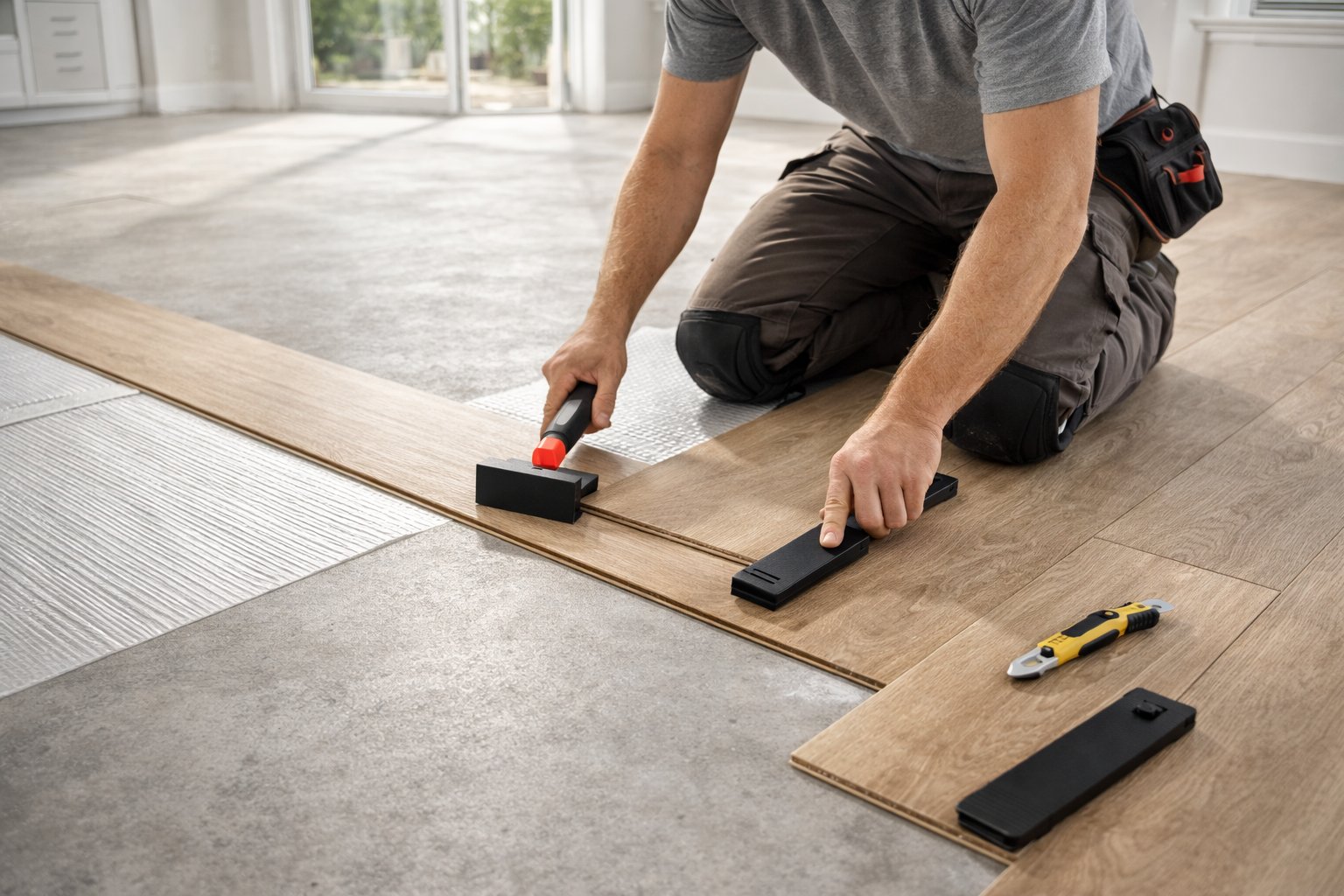
Concrete slabs are common in basements, ground-level homes, condos, and newer construction throughout Northeast Wisconsin. Luxury vinyl flooring has become a go-to option for these spaces because it offers durability, moisture resistance, and modern design without the maintenance headaches of traditional materials. That said, installing luxury vinyl flooring over concrete is not as simple as clicking planks together and calling it done. The slab underneath plays a major role in how the floor performs long-term.
When installation shortcuts happen, issues like joint separation, hollow sounds, moisture damage, and premature wear often follow. Getting it right from the start protects the investment and ensures the floor looks and feels the way it should.
Understanding what concrete slabs bring to the table
Concrete looks solid and stable, but it has a few traits that directly affect flooring. It holds moisture, expands and contracts with temperature changes, and often contains minor imperfections that are invisible until flooring is installed over it. Even newer slabs can release moisture vapor long after curing.
Luxury vinyl flooring is resilient, but it is still sensitive to what happens underneath. Ignoring slab conditions is one of the most common reasons vinyl installations fail prematurely.
Checking moisture before anything else
Moisture testing is not optional when installing vinyl over concrete. Even slabs that feel dry can transmit moisture upward, especially in basements or homes with fluctuating humidity. Excess moisture can cause vinyl planks to warp, adhesive to fail, or locking systems to weaken over time.
Professional installers use industry-approved moisture tests to determine whether the slab is suitable and whether a moisture mitigation solution is needed. Skipping this step often leads to issues that show up months after installation, long after warranties are questioned.
Surface preparation makes or breaks the install
Concrete slabs must be clean, flat, and structurally sound. Small cracks, low spots, or leftover adhesive residue can telegraph through vinyl flooring, especially thinner products. Grinding high spots and filling low areas creates a smooth, stable surface that supports the flooring evenly.
Flatness matters more than many homeowners realize. Luxury vinyl does not tolerate uneven substrates well. Even minor dips can lead to movement, noise, or joint stress as the floor is used daily.
Moisture barriers and underlayments explained
Not every luxury vinyl product requires the same underlayment approach. Some floating vinyl floors include an attached pad, while others require a separate moisture barrier or underlayment depending on slab conditions. Glue-down vinyl installations often rely on moisture-resistant adhesives rather than underlayment layers.
Choosing the wrong barrier or doubling layers can create more problems than it solves. The right system depends on moisture readings, slab condition, and the specific vinyl product selected.
Acclimation is still important on concrete
Luxury vinyl flooring must acclimate to the space where it will be installed. Concrete slabs can stay cooler than the surrounding air, especially in lower-level rooms. Allowing the flooring to adjust to room temperature and humidity reduces the risk of expansion or contraction after installation.
Skipping acclimation can result in gaps or buckling once the space reaches normal living conditions.
Floating vs glue-down installations on slabs
Floating luxury vinyl flooring is popular for residential spaces because it installs faster and allows for easier replacement later. However, floating floors rely heavily on proper slab flatness and moisture control. Any movement underneath can translate directly into the floor.
Glue-down luxury vinyl works well in areas with heavy foot traffic or large open spaces. It provides a more solid feel but demands even stricter moisture control and surface preparation. The right choice depends on how the space is used, not just personal preference.
Expansion space and room transitions
Even though luxury vinyl is more dimensionally stable than many flooring types, it still needs room to move. Proper expansion gaps around walls and fixed objects are critical, especially over concrete slabs where temperature differences are more pronounced.
Transitions between rooms, doorways, and different flooring types should be planned carefully. Clean transitions protect the flooring edges and help the installation age gracefully.
Common mistakes seen after poor slab installs
When concrete preparation is rushed or skipped, problems tend to surface slowly. Clicking noises, loose planks, visible seams, or moisture-related damage often trace back to slab conditions that were never addressed. These issues rarely qualify for manufacturer coverage if installation guidelines were ignored.
Fixing these problems usually requires removing and reinstalling the flooring, making proper preparation far more cost-effective than repair work later.
Picking the right luxury vinyl for concrete spaces
Not all luxury vinyl flooring performs the same over concrete. Core construction, thickness, locking systems, and moisture ratings all matter. A product that works well upstairs may not be ideal for a basement or slab-on-grade room.
Working with flooring experts helps narrow down options that fit both the slab conditions and the way the space is actually used.
Getting long-term performance from the start
Concrete slabs demand attention, planning, and the right materials. When moisture is managed, surfaces are properly prepared, and installation guidelines are followed closely, luxury vinyl flooring performs exceptionally well over concrete. It delivers comfort, durability, and style without the long-term concerns that often come from rushed installs.
The difference between a floor that lasts and one that causes headaches almost always comes down to what happens before the first plank goes down.
Work with flooring experts who know concrete slabs inside and out
At Bayland Flooring, our team handles luxury vinyl installations over concrete every day. From moisture testing to product selection and professional installation, we make sure every detail is done right the first time. Visit our New Franken showroom or schedule a free in-home measurement to explore in-stock options and special-order styles designed to perform beautifully over concrete.


